
Image
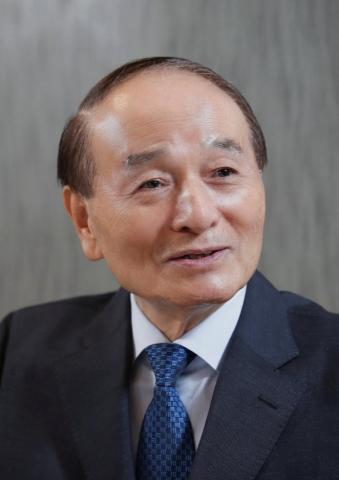
Name
Myung Oh
Nationality
South Korea
SBU Degree
Ph.D. in Electrical Engineering
Graduation Year
1972
Professional Experiences
Current Roles
- Honorary President, SUNY Korea
- Honorary President, Seoul School of Integrated Sciences & Technologies
- Chair, Korea Council of Senior Leaders
- Deputy Prime Minister (2004–2006)
- President, Konkuk University (2006–2010)
- Minister of Science and Technology (2003–2006)
- President, Ajou University (2002–2003)
- Minister of Construction and Transportation (1994–1995)
- Minister of Transportation (1993–1994)
- Minister of Communications (1987-1988)
Stony Brook Experience
When I left Korea to study at Stony Brook in the late 1960s, our country’s per-capita GDP was only a few hundred dollars, compared with over $5,000 in the United States in 1970. Much of the technological infrastructure we see today did not yet exist in Korea.
At Stony Brook, I studied in an environment with advanced laboratories, rigorous engineering training, and a culture that encouraged scientific inquiry. That experience reinforced my conviction that technological capability and higher education are essential pillars of a nation’s long-term development.
When I returned to Korea, one of the most urgent challenges was the country’s telecommunications system—installing a telephone line could take more than a year. During my tenure at the Ministry of Communications, we transformed the system so that telephone service could be connected the same day it was requested. This reform modernized Korea’s national telecommunications network and laid the foundation for the country’s IT infrastructure. It later supported many milestones as Korea emerged on the global stage, including the communications systems behind the Seoul Olympics, major infrastructure such as Incheon International Airport and high-speed rail, and Korea’s emergence as one of the world’s most advanced digital societies.
At the same time, I remained deeply committed to higher education. Serving as president of two private universities in Korea reinforced my belief that world-class universities are essential to national progress. With that vision, I helped support Stony Brook’s establishment of its campus in Songdo, creating the first American university campus in Korea to provide Korean students with access to a global standard of education while also serving as a hub in Asia for collaboration among students and scholars from around the world. Today, SUNY Korea continues to advance that vision, strengthening Stony Brook’s long- standing partnership with Korea while fostering global academic collaboration in the region.
Looking back, Stony Brook played a defining role in shaping both my career and my vision for Korea’s future. Helping bring Stony Brook to Korea felt like completing a full circle—creating opportunities for new generations of students to experience the same global education that once shaped my own path.